Articles on Issue Theme

Mădălina JURUBIțĂ
Academia de Studii Economice din Bucureşti
Accelerating geopolitical shocks and geoeconomic competition after 2020 have pushed the European Union to revisit the purpose and toolkit of its trade policy. This paper maps the key redefinitions required for the Common Commercial Policy (CCP) in a context marked by supply-chain disruptions, war in the EU’s neighbourhood, systemic rivalry in the Indo-Pacific, and heightened contestation over technology and critical inputs. The analysis first clarifies the boundary between trade policy and the broader external economic policy, then reviews the evolution of CCP competences and the institutional architecture shaping EU decision-making. Building on recent debates on fragmentation of globalization, selective de-risking/decoupling, and the securitization of interdependence, the paper assesses how trade instruments increasingly serve objectives of economic security, sustainability, and strategic autonomy. An applied comparison of the EU’s trade stance toward China and the United States highlights both trade-offs and complementarities across areas such as trade defence, FDI screening, standards, and climate-related conditionality. The paper concludes with policy recommendations aimed at improving coherence across instruments and aligning trade policy with the Union’s external objectives while preserving openness through risk-managed engagement.
ŒCONOMICA no. 4/2025
Keywords: EU trade policy, Common Commercial Policy, geoeconomics, economic security, open strategic autonomy, de-risking and decoupling, global value chains, trade defence instruments, FDI screening, sustainability conditionality, EU-China relations, EU-US relations
JEL: F13, F15, F51, F52, F55, O19
Redefining EU Trade Policy for an Age of Geoeconomic Rivalry: Strategic Autonomy, Security, and Resilience
Select Issue:
Archive
Octavian-Dragomir JORA
Academia de Studii Economice din Bucureşti

Raluca-Georgiana ROBU
Academia de Studii Economice din Bucureşti

Maria GHEORGHE (NIŢU)
Academia de Studii Economice din Bucureşti
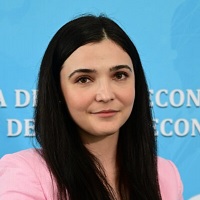
Valentin COJANU
Academia de Studii Economice din Bucureşti

Alexia-Maria POPESCU
Academia de Studii Economice din Bucureşti

Narciz BĂLĂŞOIU
Academia de Studii Economice din Bucureşti

Răzvan Marian PÎRCĂLĂBESCU
Academia de Studii Economice din Bucureşti
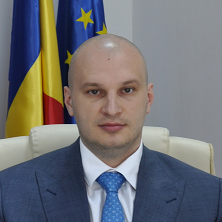
Mădălina JURUBIțĂ
Academia de Studii Economice din Bucureşti
Geicun MUSTAFA
Academia de Studii Economice din Bucureşti

Hesam JEBELI-BAKHT-ARA
Academia de Studii Economice din Bucureşti


Authors